Introduction
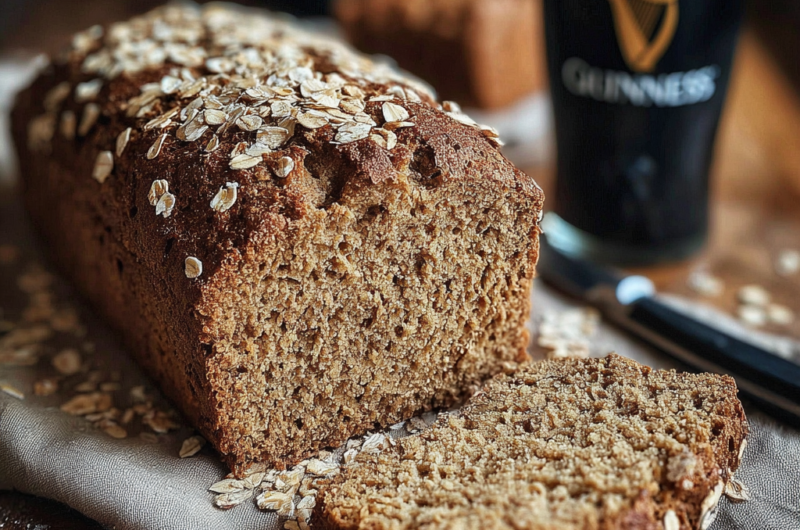
Irish brown bread is a beloved staple in Irish households, treasured for its hearty texture and nutty flavor. Incorporating Guinness and oats into the traditional recipe elevates this classic bread to a new level, adding depth and richness that complements its wholesome ingredients.
The use of Guinness not only contributes a unique flavor but also enhances the bread’s color, giving it a deep, alluring hue. Oats add a wonderful chewiness and nutritional benefits, making it a satisfying accompaniment to soups, stews, or simply enjoyed with a smear of butter.
Baking this bread is a rewarding process, perfect for both novice and experienced bakers. The combination of simple ingredients and the absence of complex techniques allow for a straightforward experience that results in a deliciously rustic loaf.
Ingredients
- 2 cups whole wheat flour
Whole wheat flour provides the foundational structure of the bread and gives it a robust, nutty flavor, enhancing its nutritional content with added fiber. - 1 cup all-purpose flour
All-purpose flour helps lighten the texture of the bread, balancing the density of the whole wheat flour and contributing to a soft yet hearty crumb. - 1 cup rolled oats
Oats add chewiness and an earthy flavor to the bread, while also increasing its fiber content and providing a satisfying bite. - 1 cup Guinness
Guinness not only infuses the bread with a rich, malty flavor but also works to tenderize the gluten, resulting in a moist and flavorful loaf. - 2 teaspoons baking soda
Baking soda acts as a leavening agent, helping the bread rise and achieve a lighter texture while balancing the acidity of the Guinness. - 1 teaspoon salt
Salt enhances the overall flavor of the bread, helping to elevate its natural ingredients and ensuring a well-rounded taste. - 1 tablespoon brown sugar
Brown sugar adds a touch of sweetness and caramel flavor, complementing the bitter notes of the Guinness while also contributing to browning. - 1 tablespoon melted butter (optional)
Melted butter can enrich the bread’s flavor and contribute to a soft crust, though it’s optional for those preferring a more traditional recipe.
Directions & Preparation
Step 1: Preheat the oven to 425°F (220°C).
Preheating your oven ensures that the bread starts baking at the right temperature, which is crucial for proper rising and crust formation. This initial heat helps the baking soda activate quickly, creating lift and texture in the bread. Make sure to allow your oven enough time to reach the desired temperature before placing the dough inside.
Step 2: In a large mixing bowl, combine whole wheat flour, all-purpose flour, oats, baking soda, salt, and brown sugar.
Mixing the dry ingredients together first ensures even distribution of the leavening agent and salt, preventing any pockets of flavor or rising agents from forming unevenly. Using a whisk or fork can help aerate the mixture, allowing for a lighter texture, and creating a homogenous blend that is critical for consistent baking results.
Step 3: Make a well in the center of the dry ingredients and pour in the Guinness.
Creating a well allows the liquid to be absorbed more gradually by the dry ingredients, making for a smoother dough consistency. The interaction between the Guinness and baking soda will begin to react, producing carbon dioxide that helps the bread rise. This is a key moment, as the dough should start to bubble slightly, indicating it's ready for mixing.
Step 4: Mix until just combined; do not overmix.
Overmixing can lead to a dense bread rather than a light, airy texture. Aim for a dough that holds together but is still slightly shaggy. This texture is indicative of proper mixing; it indicates that the ingredients have bonded enough to form a cohesive mass while retaining some rustic charm. Remember, it’s the imperfections that yield homemade authenticity.
Step 5: Turn the dough onto a floured surface and shape it into a round loaf.
Shaping the dough on a floured surface allows for better control over texture and prevents sticking. Gently pat and fold without kneading too hard, as you want to retain the air incorporated during mixing. This step is also where you visually inspect the dough to ensure it's cohesive yet maintains a slightly rustic look to it, typical of Irish brown bread.
Step 6: Transfer the shaped loaf to a baking sheet lined with parchment paper.
Using parchment paper not only prevents sticking but also allows for a more even bake. Place your loaf in the center of the sheet to ensure even heat circulation around the bread. This placement is critical, especially in home ovens, to promote consistent browning and cooking throughout the entire loaf.
Step 7: Score the top of the loaf with a sharp knife.
Scoring the top of the loaf is a traditional method that serves both practical and aesthetic purposes. It allows steam to escape during baking, which helps prevent the bread from cracking unattractively. Additionally, the beautiful pattern created by the scores enhances the visual appeal of the loaf, contributing to the homemade charm.
Step 8: Bake for 30-35 minutes or until golden brown.
Baking provides the essential element of heat that transforms the raw dough into a crusty, flavorful bread. As the bread bakes, the heat activates the leavening agents, and the sugars caramelize, creating that golden-brown crust. To ensure it’s done, tap the bottom; if it sounds hollow, your bread is ready. Take care not to underbake, as it affects texture and flavor.
Step 9: Let the bread cool on a wire rack before slicing.
Cooling the bread on a wire rack allows air to circulate around it, helping to prevent sogginess as steam escapes. Cutting into hot bread can lead to a gummy texture, so patience during this step rewards you with cleaner slices. Once cooled, the bread can truly showcase its texture and moisture, making every bite delightful.

The Richness of Guinness in Baking
Guinness is not only a popular Irish stout; its unique blend of ingredients adds distinct flavor notes to baked goods. In this Irish brown bread, the complexities of the beer enhance the overall taste, lending a slight bitterness that beautifully balances the sweetness of the brown sugar. The maltiness of Guinness interacts with the oats, creating a delightful richness that transcends traditional bread recipes.
Oats: A Nutritional Powerhouse
Incorporating oats into this Irish brown bread adds more than just texture; they are a nutritional powerhouse packed with vitamins, minerals, and fiber. Oats contain beta-glucans, which are known for their heart-healthy benefits, including cholesterol-lowering properties. This makes the bread not only a comforting choice but also a health-conscious one, perfect for daily consumption or as a wholesome snack.
Traditional Irish Baking Techniques
Irish baking often emphasizes simplicity and the use of quality ingredients, aspects that are preserved in this recipe. The absence of commercial yeast in favor of baking soda reflects traditional methods, which rely on naturally acidic ingredients to achieve leavening. This approach not only connects bakers to the rich history of Irish cuisine but also yields a unique flavor profile that resonates with authenticity and tradition.
FAQs
Can I use a different type of beer?
Yes, while Guinness adds a unique flavor, you can experiment with other stouts or dark beers for different nuances.
What if my dough is too dry?
If your dough appears dry, add a small amount of water or extra Guinness, a tablespoon at a time, mixing until the desired consistency is achieved.
Is it possible to make this recipe gluten-free?
You can try substituting gluten-free flour blends, but the texture may differ from the traditional version.
My bread didn’t rise properly, what could have gone wrong?
Ensure your baking soda is fresh, as expired leavening agents can prevent the dough from rising adequately.
Can I add herbs or spices to enhance flavor?
Absolutely! Consider adding caraway seeds or a pinch of rosemary for an aromatic twist.
How can I amplify the sweetness of the bread?
If you prefer a sweeter bread, consider increasing the brown sugar or adding honey to the dough.
What if my loaf is too dense?
If your bread comes out dense, it may indicate overmixing the dough or using too much whole wheat flour; adjusting those factors should help.
Can I use quick oats instead of rolled oats?
Quick oats can be used, but they will result in a different texture and may absorb liquid differently, impacting the final bread.
Conclusion
Baking Irish brown bread with Guinness and oats is more than just creating a loaf; it connects you to a cherished culinary tradition. The harmonious blend of flavors brings a rustic charm to the table, making it a versatile companion to various dishes.
As you savor each slice, you’ll appreciate the deep, satisfying flavors that come from simple ingredients combined with a touch of care and craft. Whether enjoyed with a warm bowl of soup or simply spread with butter, this bread is sure to become a beloved addition to your home kitchen.
Recipe Card
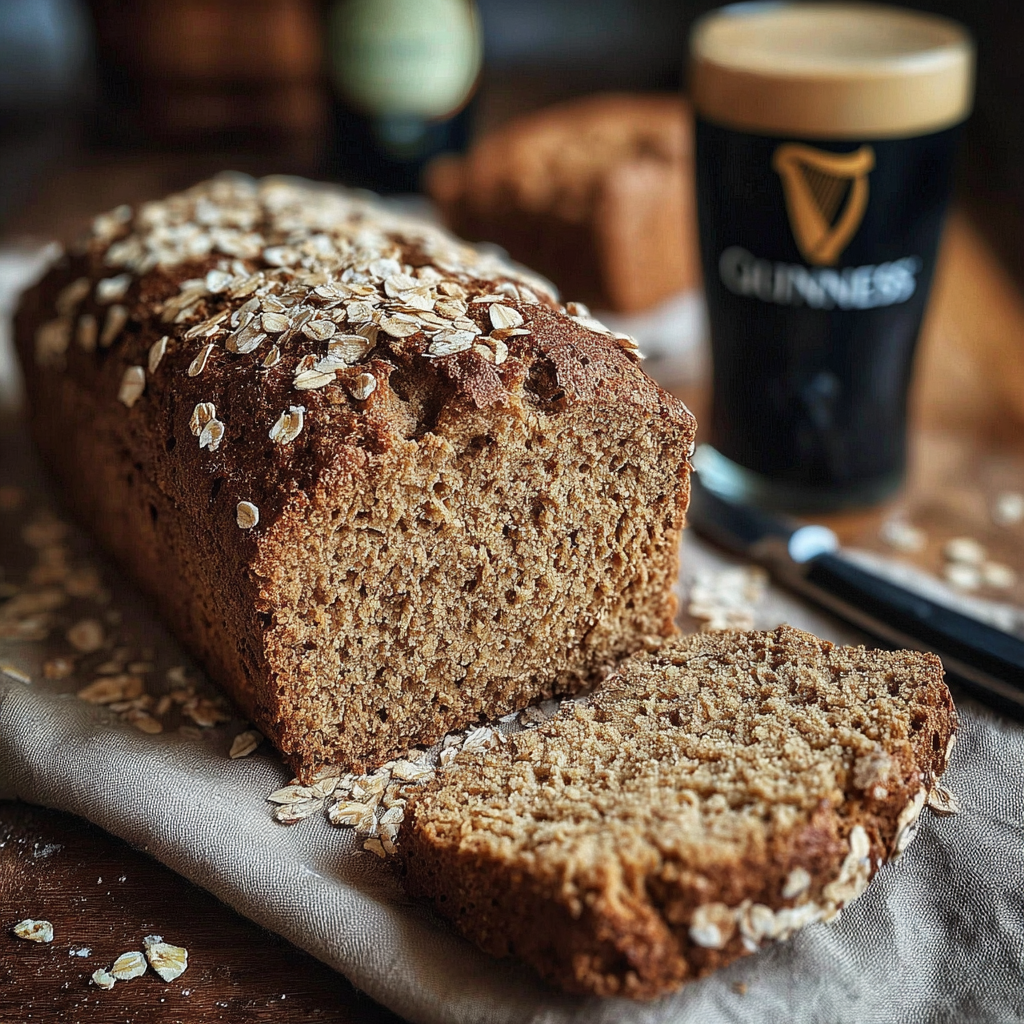
Creating Irish Brown Bread with Guinness and Oats
Ingredients
Method
- Preheat the oven to 425°F (220°C).
- In a large mixing bowl, combine whole wheat flour, all-purpose flour, oats, baking soda, salt, and brown sugar.
- Make a well in the center of the dry ingredients and pour in the Guinness.
- Mix until just combined; do not overmix.
- Turn the dough onto a floured surface and shape it into a round loaf.
- Transfer the shaped loaf to a baking sheet lined with parchment paper.
- Score the top of the loaf with a sharp knife.
- Bake for 30-35 minutes or until golden brown.
- Let the bread cool on a wire rack before slicing.
Notes
Additional serving suggestions: pair with a crisp salad, garlic bread, or roasted seasonal vegetables for balance.
For make-ahead, prep components separately and assemble just before heating to preserve texture.
Taste and adjust with acid (lemon/vinegar) and salt right at the end to wake up flavors.