Introduction
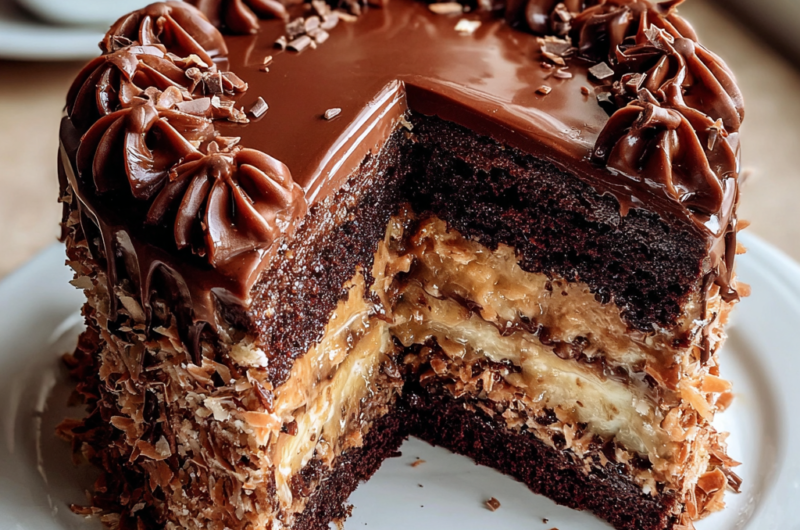
German Chocolate Cake is a dessert that has captured the hearts of many with its rich flavors and decadent layers. Despite its name, the cake has no direct connection to Germany; instead, it is named after an American named Samuel German, who developed a type of dark-baking chocolate for a manufacturer in 1852. Over time, this chocolate became a key ingredient in a delightful layered cake.
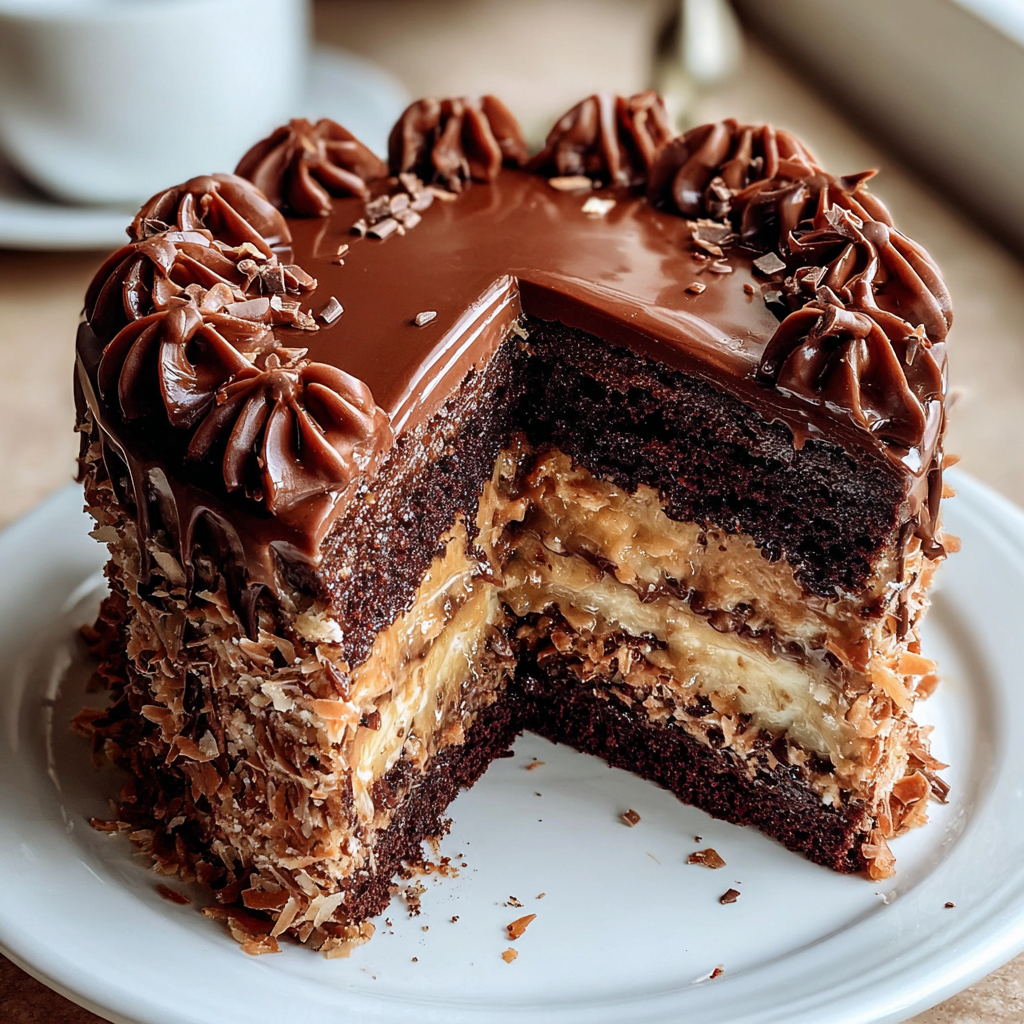
Characterized by its moist chocolate layers and sweet coconut-pecan frosting, German Chocolate Cake stands out at any celebration. Each bite is an inviting combination of textures and flavors, making it a perfect dessert for birthdays, anniversaries, or simply a weekend indulgence. As you prepare to make this cake, be ready to impress family and friends with a truly delightful treat.
Ingredients
- 3 cups all-purpose flour
All-purpose flour provides the structure for the cake, helping it rise and maintain its shape. The protein content in the flour is crucial for achieving the cake’s tender yet sturdy texture. - 3 cups granulated sugar
Sugar not only sweetens the cake but also contributes to its moistness by attracting and retaining moisture during baking. It balances the rich flavors of the chocolate. - 1 1/2 cups unsweetened cocoa powder
Cocoa powder imparts a deep, rich chocolate flavor to the cake. Choosing high-quality cocoa will enhance the overall taste and depth of your German Chocolate Cake. - 1 1/2 cups buttermilk
Buttermilk adds acidity, which chemically reacts with the baking soda to create a tender crumb. This ingredient also enhances flavor, giving the cake a slight tang that pairs wonderfully with the sweetness. - 1 1/4 cups vegetable oil
Vegetable oil lends moisture to the cake, helping it stay soft and flavorful for days. It produces a denser cake than butter, which is ideal for this recipe. - 6 large eggs
Eggs provide structure and stability to the cake, serving as a binding agent that holds all ingredients together while also adding richness and moisture. - 2 teaspoons baking soda
Baking soda acts as a leavening agent, helping the cake to rise and achieve that desirable fluffy texture. It also works well in conjunction with the acidity of buttermilk. - 1 teaspoon baking powder
Baking powder serves as an additional leavening agent, balancing the rise while creating a lighter texture in the cake, which is essential for a successful bake. - 1 teaspoon salt
Salt enhances the flavors in the cake, balancing sweetness and bringing out the rich chocolate notes. It is a necessary component to create depth in desserts. - 1 teaspoon vanilla extract
Vanilla extract adds a warm, aromatic quality to the cake. It complements the chocolate, enhancing the overall flavor profile. - 1 cup shredded coconut
Shredded coconut not only gives texture but also adds a natural sweetness and a chewy element to the frosting, making each bite delightful. - 1 cup chopped pecans
Chopped pecans contribute a nutty flavor and crunch that contrasts beautifully with the creamy frosting, rounding out the taste experience. - 1 cup sweetened condensed milk
This milk adds a rich, creamy sweetness to the frosting, helping to bind the coconut and pecans while enhancing the overall flavor.
Directions & Preparation
Step 1: Preheat your oven to 350°F (175°C).
Preheating the oven ensures that your cake starts baking at the right temperature, which is vital for achieving a proper rise. This temperature works well for cooking the batter evenly, so don’t skip this step.
Step 2: Grease and flour three 9-inch round cake pans.
Greasing and flouring the pans prevents the cake from sticking, which is key to a smooth release. An even layer of flour will also allow the cakes to rise beautifully without uneven spots.
Step 3: In a large bowl, combine the flour, sugar, cocoa powder, baking soda, baking powder, and salt.
Mixing the dry ingredients first ensures they are evenly distributed throughout the batter. This step prevents clumping and guarantees that the baking soda and powder activate properly.
Step 4: In another large bowl, whisk together the buttermilk, vegetable oil, eggs, and vanilla extract until well combined.
Whisking these wet ingredients together incorporates air into the mixture, giving the cake a lighter texture. It also ensures that the flavors meld nicely before combining with the dry ingredients.
Step 5: Gradually add the wet mixture to the dry ingredients, blending until smooth.
By combining wet and dry ingredients gradually, you avoid over-mixing, which can lead to a dense cake. Blend just until the batter is cohesive, ensuring not to overwork it.
Step 6: Divide the batter evenly among the prepared pans and smooth the tops.
Distributing the batter evenly ensures all three layers bake uniformly. This step is crucial for stacking the layers later and maintaining a visually appealing cake.
Step 7: Bake for 30 to 35 minutes, or until a toothpick inserted in the center comes out clean.
Baking at the right time prevents undercooking and drying out the cake. Testing with a toothpick helps determine doneness; it's important to check a few minutes before the timer goes off.
Step 8: Allow the cakes to cool in the pans for 10 minutes, then turn them out onto wire racks to cool completely.
Letting the cakes cool slightly helps them release from the pans. Transferring them to wire racks allows for even cooling, preventing soggy bottoms.
Step 9: Prepare the coconut-pecan frosting by combining the coconut, pecans, and sweetened condensed milk in a large bowl.
Mixing the frosting components together allows the flavors to meld nicely, creating a cohesive filling that will spread smoothly. It’s also a chance to check the consistency before applying it between layers.
Step 10: Once the cakes are completely cool, place one layer on a serving plate and spread a layer of frosting on top.
Assembling the layers while they are completely cooled prevents the frosting from melting. A generous layer of frosting adds an enticing flavor and texture to each slice.
Step 11: Repeat with the second layer, then place the third layer on top and frost the top and sides of the cake.
Frosting the sides ensures all layers are well incorporated, and adds a beautiful finish. Be creative with your frosting application to enhance the presentation of your cake.
Step 12: Let the cake set for at least 30 minutes before slicing and serving.
Allowing the cake to set helps the frosting stabilize and makes it easier to slice. This step also lets the flavors deepen, resulting in a more harmonious dessert.

Balancing Flavors in Frosting
The frosting for German Chocolate Cake is as crucial as the cake itself. By blending shredded coconut, chopped pecans, and sweetened condensed milk, this mixture offers a delightful contrast to the rich chocolate layers. The sweetness from the condensed milk adds a creamy texture, while the coconut and pecans enhance the flavor with their unique nuttiness and chewiness. Experimenting with the proportions can lead to different flavor profiles that suit your palate.
Mastering Cake Texture
Achieving the ideal texture in your German Chocolate Cake is essential for its overall quality. Incorporating oil instead of butter keeps the cake moist and dense, while the buttermilk ensures a tender crumb by reacting with the leavening agents. Mixing the ingredients correctly and allowing the cake layers to cool before assembly ensures that each slice remains soft and luscious, creating a memorable dining experience.
Presentation Matters
A well-presented German Chocolate Cake elevates its appeal immensely. Taking time to spread the frosting evenly and decorating the top with extra coconut and pecans can transform your cake into a stunning centerpiece. By layering and frosting with care, you not only enhance the cake's aesthetics but also build anticipation for its delightful flavors, making any occasion feel special.
FAQs
What can I do if my frosting is too thick?
If your frosting turns out too thick, gradually add a bit of milk or cream until you achieve the desired consistency. This will make it easier to spread and give a smoother finish.
How can I make this cake less sweet?
To reduce the sweetness, consider cutting back on the sugar in the cake and frosting. You could also add a pinch of salt to balance the flavors effectively.
Can I use a different type of flour?
Yes, you can experiment with cake flour or even a gluten-free blend, but the texture may vary. Adjusting liquid ratios might be necessary for the best results.
What should I do if the cake layers are domed?
If your cake layers dome up during baking, level them with a serrated knife once they cool. This helps them stack better and ensures a more polished presentation.
Is it necessary to use all three layers?
No, it’s not necessary to bake three layers. You can make two thicker layers instead, but keep in mind that frosting will still need to be spread evenly.
Can I add different nuts to the frosting?
Certainly! While pecans are traditional, walnuts or hazelnuts can provide an interesting twist. Just remember to chop them evenly for consistent texture.
Conclusion
In conclusion, German Chocolate Cake is not just a dessert; it’s a celebration of flavors and textures that speaks to the soul of home baking. With its rich chocolate layers and delightful coconut-pecan frosting, it's sure to please any crowd, from casual dinners to festive gatherings.
By following this recipe and its key techniques, you can create a stunning centerpiece that showcases your baking skills. Enjoy the satisfaction of baking from scratch, and watch as loved ones delight in every delicious bite.
Recipe Card
Delight in Every Bite of German Chocolate Cake
Ingredients
Method
- Preheat your oven to 350°F (175°C).
- Grease and flour three 9-inch round cake pans.
- In a large bowl, combine the flour, sugar, cocoa powder, baking soda, baking powder, and salt.
- In another large bowl, whisk together the buttermilk, vegetable oil, eggs, and vanilla extract until well combined.
- Gradually add the wet mixture to the dry ingredients, blending until smooth.
- Divide the batter evenly among the prepared pans and smooth the tops.
- Bake for 30 to 35 minutes, or until a toothpick inserted in the center comes out clean.
- Allow the cakes to cool in the pans for 10 minutes, then turn them out onto wire racks to cool completely.
- Prepare the coconut-pecan frosting by combining the coconut, pecans, and sweetened condensed milk in a large bowl.
- Once the cakes are completely cool, place one layer on a serving plate and spread a layer of frosting on top.
- Repeat with the second layer, then place the third layer on top and frost the top and sides of the cake.
- Let the cake set for at least 30 minutes before slicing and serving.
Notes
Additional serving suggestions: pair with a crisp salad, garlic bread, or roasted seasonal vegetables for balance.
For make-ahead, prep components separately and assemble just before heating to preserve texture.
Taste and adjust with acid (lemon/vinegar) and salt right at the end to wake up flavors.